
"10kg annual production"
300 article(s) found

Coffee planting History of Coffee introduction and expansion in China in the early stage (5)
1. From the first peak period of the development of China's coffee industry (1952-1961) to the late 1940s, according to recorded figures, there are 2173.33 hectares of rubber plantations in Hainan Island, with a total of 867600 rubber trees, with an annual output of 199,000 tons of dry rubber, and more than 300,000 coffee plants. the annual output of coffee beans is 1 ton. According to a survey in the early 1950s, there was a large amount of coffee left in Fushan area of Chengmai County, with a total of 70,000.

El Salvador Coffee Variety Flavor description introduction to Fine Coffee Bean Taste Manor
Savanna climate. The plain area belongs to the tropical rain forest climate and the mountain area belongs to the subtropical forest climate. The average annual temperature is 25-28 ℃. The annual precipitation is more than 1800 mm in mountain areas and about 1000 mm in coastal areas. The rainy season is from May to October. Don't underestimate El Salvador's coffee production. In its heyday, it was the world's fourth largest coffee producer, but decades of civil war almost dragged down coffee
The History of Coffee introduction and expansion in China in the early stage (5)
1. From the first peak period of the development of China's coffee industry (1952-1961) to the late 1940s, according to recorded figures, there are 2173.33 hectares of rubber plantations in Hainan Island, with a total of 867600 rubber trees, with an annual output of 199,000 tons of dry rubber, and more than 300,000 coffee plants. the annual output of coffee beans is 1 ton. According to a survey in the early 1950s, there was a large amount of coffee left in Fushan area of Chengmai County, with a total of 70,000.
Mysterious Jamaica and Jamaica Blue Mountain Coffee
Jamaica----Hearing this name, I think of Blue Mountain Coffee in Jamaica. It's kind of mysterious.
Coffee Common sense mysterious Jamaican Blue Mountain Coffee is not mysterious
Jamaica-hearing this name, I think of Jamaica's Blue Mountain Coffee. It makes people feel a bit mysterious. In fact, Jamaica means Kessemaka in Indian Arawak (Jamaica was colonized by Spanish in 1509 and was occupied by British troops in 1655). The country covers an area of 10991 square kilometers, located in the west of the Caribbean Sea.

Brazil Bau Manor Sirado FC sun-cured coffee beans how much is it _ Bau Manor Syrador Coffee brewed
Professional coffee knowledge exchange more coffee bean information please pay attention to the coffee workshop (Wechat official account cafe_style) Bau Manor is located in the Brazilian state of Minas Gerais (Minas Gerais), Hilado (Cerrado) Lago Aformosa (Lagoa Formosa), located in the plateau 1100 meters above sea level, the annual average temperature is 24 degrees, mountain low temperature 10 degrees, the annual average

Introduction of El Salvador Himalayan Coffee varieties based on the characteristics of Grinding degree, taste and Flavor
In the early 1990s, guerrilla warfare greatly damaged the country's national economy, reducing coffee production from 3.5 million bags in the early 1970s to 2.5 million bags in 1990-1991. The eastern part of the country was most affected by guerrilla warfare, and many farmers and workers were forced to leave the manor. The shortage of funds has led to a sharp drop in coffee production, from 1200 kg per hectare in the past to no yield per hectare today.

Tarazhu Cooperative's loud and long sour Costa Rican coffee
Professional coffee knowledge exchange more coffee bean information please follow the coffee workshop (Wechat official account cafe_style) Costa Rica Coffee cultivation was introduced from Cuba in 1779, only the first export of coffee in 1820, there are about 32000 coffee farmers, the average planting area per farmer is less than one hectare (10000 tons). Costa Rica has a population of 41 billion.

Costa Rican Coffee House-Diamond Hill Coffee House Costa Rican Coffee House
Costa Rican coffee cultivation was introduced from Cuba in 1779 and exported for the first time in 1820. There are about 32,000 coffee farmers in Costa Rica, with an average cultivation area of less than one hectare (10,000 m2) per farmer. Costa Rica has a population of 4.1 million (2006), coffee cultivation area of 82,500 hectares, annual production of 1.7 million bags (60kgs per bag), annual domestic consumption of 380,000 bags, flat

Costa Rican Goddess Manor Coffee Variety description, Taste characteristics, introduction to Fine Coffee
Coffee was introduced into Costa Rica from Cuba in 1729. Today, its coffee industry is one of the well-organized industries in the world, with a yield of 1700 kg per hectare. Costa Rica has only 3.5 million people but 400m coffee trees, and coffee exports account for 25 per cent of the country's total exports. The volcanic soil of Costa Rica is very fertile and well drained, especially in the central part.
Burundian boutique single coffee bean characteristic story
Burundian Coffee bears a striking resemblance to neighboring Rwanda, where coffee from the two countries is often confused. Burundian coffee is mainly grown in bourbon, with traditional wet processing of coffee cherries. Its boutique coffee is characterized by elegant sweetness and bright citrus aromas. Burundi is located on the border between eastern and central Africa.

African Burundian boutique coffee beans (Urundi)
Burundian Coffee bears a striking resemblance to neighboring Rwanda, where coffee from the two countries is often confused. Burundian coffee is mainly grown in bourbon, with traditional wet processing of coffee cherries. Its boutique coffee is characterized by elegant sweetness and bright citrus aromas. Origin: Burundi is located in eastern and central Africa.

Description of Coffee Flavor in Fenghuang Manor, Costa Rica
The research center, located about 30 kilometers northeast of San Jose, the capital of Costa Rica, belongs to the Costa Rican Coffee Association and is the research institution for planting, breeding and quality inspection of Brazilian coffee fruits in Costa rica. in addition, it also has 10 hectares of experimental plots, planting a number of excellent varieties. Coffee is the main agricultural product in Costa Rica, with an annual output of more than 2 million bags

The second Cross-Strait Fine Coffee City Forum is finally waiting for you.
According to the latest research report, China has become the fastest growing market for coffee consumption in the world for several years in a row, with an annual growth rate of about 15-20%, and is likely to become the core area affecting coffee prices and production in the future. Mr. Han also mentioned in the sharing that the annual sales of coffee in China is only 110000 tons, with less than 100g per capita, with an annual growth rate of 16% in plural, 10-16 years later.
The reason why Peruvian raccoon dung coffee is expensive
Follow the caf é (Wechat official account vdailycom) and found that raccoon dung coffee is very expensive in Beautiful Cafe. Reporters in a small coffee shop in Lima, Peru, saw an endless stream of people coming to buy and drink coffee. On the shelf are cans of coffee from different parts of Peru. The reporter found that a kind of coffee called raccoon is ridiculously expensive and is something else.

African Burundian boutique coffee beans were formerly known as Urundi
Burundian Coffee bears a striking resemblance to neighboring Rwanda, where coffee from the two countries is often confused. Burundian coffee is mainly grown in bourbon, with traditional wet processing of coffee cherries. Its boutique coffee is characterized by elegant sweetness and bright citrus aromas. Origin: Burundi is located in eastern and central Africa.

There is an opportunity for China's ready-to-drink coffee market to meet the hundreds of billions of mark in innovative packaging.
With the continuous improvement of the quality of public life and the continuous change of the concept of life, ready-to-drink coffee with gradual progress in production technology and product quality is heating up rapidly, and a large number of young people and business people are the potential groups behind it. According to statistics, the per capita consumption of coffee in Western Europe is 5.4 kg, while that in Singapore and Japan is 1.9 kg and 1.4 kg respectively.

Introduction to Brazilian Coffee Flavor and Taste Brazilian fine coffee beans in Brazilian coffee producing areas
The topography of Brazil is mainly divided into two parts, one is the Brazilian plateau above 500 meters above sea level, distributed in the south of Brazil, the other is the plain below 200 meters above sea level, mainly distributed in the north of the Amazon River basin and the west. The topography of the whole territory is divided into Amazon plain, Paraguay basin, Brazilian plateau and Guyana plateau, of which the Amazon plain accounts for about 1% of the national area. Yes

Introduction to the Flavor and Taste Manor of El Salvador's boutique Coffee Bean producing area
El Salvador's domestic topography is mainly mountainous, plateau, volcanic, known as the country of volcanoes, Santa Ana active volcano 2385 meters above sea level, the highest peak in the country; the northern part of the country is the Lompa Valley and the southern part is the narrow coastal plain. Climatic characteristics all over El Salvador has a tropical climate, with an annual average temperature of 28 ℃; dry season from November to April and rainy season from May to October; coastal and lowland atmosphere
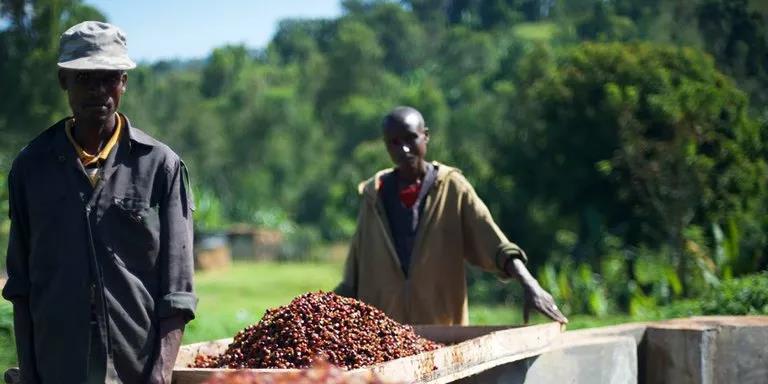
Ethiopian Coffee | characteristics of Nine boutique producing areas and Coffee Trading system
For more professional coffee exchanges, please scan the code to follow Wechat: FrontStreetCoffee Ethiopian name: Ethiopia location: East African Capital: Adis Abba Addis Ababa Religion: Christian main language: Amharic time Zone: GMT+3 Metrology: metric (Metric) currency: bill Birr (1 $20 birr) Agricultural products (Export): coffee, Flowers, Zhi